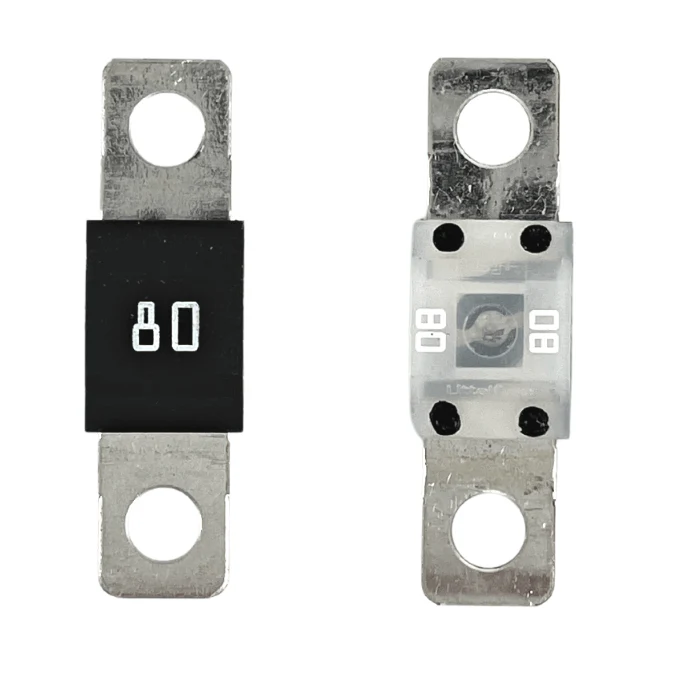
BAINTECH SWE-MID080 80A MIDI Fuse
BAINTECH SWE-MID080 80A MIDI Fuse - Replacement Automotive Fuse for Circuit Protection in 12V/24V Electrical Systems
Replace blown fuses and maintain circuit protection with the Baintech SWE-MID080 80A MIDI Fuse—featuring standard MIDI fuse format compatible with all MIDI fuse holders, 80A current rating suitable for large inverters, high-output DC-DC chargers, heavy-duty LED lighting arrays, multiple high-current accessory distribution, and substantial electrical loads, robust blade-style construction withstanding vibration and mechanical stress in mobile installations, clear fuse body enabling visual inspection of fuse element condition, reliable overcurrent protection preventing wire overheating and electrical fires, corrosion-resistant terminals ensuring dependable electrical contact, and trusted replacement fuse solution for caravans, 4WD vehicles, boats, camper trailers, commercial vehicles, and mobile installations requiring 80A circuit protection in automotive and marine electrical systems.
Product Overview
The Baintech SWE-MID080 provides replacement 80A MIDI fuse for circuit protection in 12V and 24V electrical systems—essential consumable component for maintaining proper overcurrent protection in auxiliary battery circuits, large inverter installations, LED lighting systems, high-output charging systems, and high-current accessory distribution. MIDI fuse format represents industry-standard automotive fuse design offering 30-100A current capacity range—bridges gap between standard blade fuses (2-40A typical) and larger MEGA fuses (80-500A) providing optimal solution for high-current applications common in recreational vehicles, marine installations, and commercial vehicle auxiliary systems. 80A rating makes this fuse suitable for protecting circuits including large power inverters (1100-1500W continuous), high-output DC-DC chargers (70-80A output rating), auxiliary battery charging systems with substantial capacity, heavy-duty LED light bar arrays (multiple high-power bars totaling 800-960W combined), multiple parallel accessory distribution (consolidating several high-current circuits at distribution point), solar charge controllers (70-80A output capacity), dual battery systems with significant loads, combination high-current installations, and general high-current accessories drawing up to 80A continuous operation. Clear transparent fuse body enables visual inspection of internal fuse element—allows quick determination of fuse condition without electrical testing equipment by observing whether metal strip remains intact or has melted/separated indicating blown fuse requiring replacement. Robust blade-style terminal construction ensures reliable mechanical retention in MIDI fuse holders and maintains positive electrical contact despite vibration, temperature cycling, and mechanical stress typical in mobile installations—prevents loose fuse connections causing intermittent circuits, voltage drops, or heating from poor electrical contact. Corrosion-resistant terminal plating withstands exposure to moisture, road salt, engine bay heat, and environmental contamination maintaining reliable electrical conductivity throughout fuse service life—particularly important in marine environments and coastal regions where corrosion rapidly degrades unprotected electrical connections.
Key Features
Standard MIDI Fuse Format Compatibility: Universal MIDI fuse design ensures compatibility with all standard MIDI fuse holders from Baintech and other manufacturers—enables direct replacement of blown fuses without compatibility concerns or adaptor requirements. Standardized dimensions and terminal configuration guarantee proper mechanical fit and electrical contact in any MIDI holder. Widely adopted industry standard ensures replacement fuse availability from automotive retailers, marine suppliers, electrical distributors, and mobile accessory shops—eliminates extended downtime from specialty part sourcing difficulties. Compatible with existing MIDI fuse holder installations in caravans, 4WD vehicles, boats, commercial vehicles, and auxiliary electrical systems requiring 80A circuit protection.
80A Current Rating for High-Current Applications: 80A rating provides appropriate circuit protection for large power inverters (1100-1500W continuous at 12V drawing 95-140A accounting for efficiency losses and surge capacity), high-output DC-DC chargers (70-80A output rating protecting charging circuits), auxiliary battery charging with substantial capacity (alternator feeds up to 80A), heavy-duty LED lighting arrays (multiple high-power light bars totaling approximately 960W at 12V), multiple parallel accessory distribution (consolidating various high-current circuits at central distribution point), solar charging systems (charge controllers 70-80A output rating), dual battery systems with significant loading, combination high-current circuits powering multiple devices (inverter plus lights plus accessories simultaneously), and general accessories up to 80A continuous current draw. Fuse rating selected based on circuit requirements—80A appropriate for circuits drawing 53-64A continuous operation providing 25% safety margin for normal operation while protecting from dangerous overcurrent conditions.
Clear Body Visual Inspection: Transparent fuse body enables quick visual determination of fuse condition without removal from holder or electrical testing—internal metal element visible showing intact conductor indicating good fuse or severed/melted element indicating blown fuse requiring replacement. Visual inspection particularly valuable during troubleshooting electrical problems—allows rapid identification of blown fuse as potential cause of circuit failure without multimeter testing or trial-and-error component substitution. Clear body construction also permits observation of fuse element condition during installation verifying new fuse intact before installation preventing installation of damaged fuse causing immediate circuit failure. Saves troubleshooting time in field repairs and roadside situations where testing equipment may be unavailable or inconvenient to access.
Robust Blade Terminal Construction: Heavy-duty blade-style terminals ensure positive mechanical retention in MIDI fuse holder preventing accidental fuse dislodgement from vibration, mechanical shock, or thermal cycling common in mobile installations. Terminal geometry provides secure friction fit while enabling tool-free hand installation and removal for convenient fuse replacement during maintenance or troubleshooting. Blade thickness and material selection withstand repeated insertion/removal cycles without terminal deformation or mechanical wear affecting electrical contact quality. Terminal design maintains reliable low-resistance electrical connection under high-current conditions—80A continuous current generates substantial heat requiring robust terminal construction preventing contact degradation or resistance increases causing voltage drops or connection failures particularly critical at higher current levels approaching MIDI fuse maximum capacity.
Corrosion-Resistant Terminal Plating: Terminal surfaces feature corrosion-resistant plating maintaining reliable electrical conductivity despite exposure to moisture, road salt spray, engine bay heat, and environmental contamination typical in automotive and marine electrical systems. Plating prevents oxidation and corrosion formation on terminal surfaces—critical for maintaining low contact resistance ensuring minimal voltage drop and efficient current delivery through fuse to protected circuit. Enhanced corrosion resistance particularly important in marine installations, coastal environments, vehicles operating in salty conditions, or under-bonnet locations exposed to heat, moisture, and contamination where unprotected terminals rapidly corrode degrading electrical performance. Maintains consistent fuse performance throughout service life without resistance increases from terminal corrosion affecting circuit operation especially important at 80A where minor resistance increases cause significant voltage drops and heat generation.
Reliable Overcurrent Protection: Fuse element engineered to reliably interrupt circuit current when load exceeds 80A rating protecting circuit wiring, connected equipment, and vehicle electrical system from damage caused by overcurrent conditions. Time-current characteristics provide appropriate tradeoff between nuisance tripping during brief surge currents (motor starting, inverter inrush, compressor startup) and rapid interruption during sustained overloads or short circuits preventing wire overheating and fire hazards. Consistent blow characteristics ensure predictable circuit protection—fuse interrupts current within specified timeframe after overcurrent event preventing progressive damage to wiring insulation or connected equipment from sustained overload conditions before fuse activation.
Quality Replacement Component: Manufactured to automotive industry standards ensuring reliable performance, consistent blow characteristics, and proper fit in MIDI fuse holder applications. Quality construction provides dependable circuit protection without premature failure from manufacturing defects or substandard materials common in economy fuses. Appropriate replacement fuse for maintaining proper circuit protection in auxiliary electrical systems after blown fuse events from overload conditions, short circuits, or equipment faults. Essential consumable component for mobile electrical system maintenance—prudent practice maintaining spare fuses in vehicle tool kit enabling rapid circuit restoration after fuse replacement without extended downtime waiting parts delivery particularly important for high-current circuits powering essential equipment.
Versatile Circuit Protection Applications: Suitable for large inverter systems (1100-1500W), high-output DC-DC chargers (70-80A), auxiliary battery charging circuits with high current capacity, heavy-duty LED lighting arrays, multiple high-current accessory distribution, solar charging systems with substantial output, dual battery systems with significant loads, combination high-current installations powering multiple simultaneous loads, and general 80A circuits in caravans, 4WD vehicles, boats, camper trailers, commercial vehicles, agricultural equipment, and mobile installations requiring reliable 80A overcurrent protection in 12V or 24V electrical systems.
Part of Baintech's Electrical Protection Range: Component of comprehensive electrical protection product range offering diverse fuse ratings and formats for automotive and marine circuit protection requirements. Baintech reputation built on quality electrical components, reliable performance under demanding conditions, and proper engineering ensuring circuit protection functions correctly. Available through established Australian distribution networks providing convenient replacement fuse availability through auto electrical retailers, caravan accessory suppliers, marine equipment distributors, and 4WD specialty stores.
Technical Specifications
| Part Number | SWE-MID080 |
| SKU | SWE-MID080 |
| Product Type | MIDI Fuse (Replacement) |
| Brand | Baintech |
| Fuse Type | MIDI Fuse Format |
| Current Rating | 80A |
| Voltage Rating | 12V/24V DC (32V maximum typical) |
| Fuse Body | Clear Transparent for Visual Inspection |
| Terminal Type | Blade-Style with Corrosion-Resistant Plating |
| Weight | 0.05kg |
| Compatibility | All Standard MIDI Fuse Holders |
| Applications | Large Inverters, High-Output DC-DC Chargers, Heavy-Duty Lighting, Accessory Distribution, 12V/24V Systems |
Frequently Asked Questions
Q: What size inverter can 80A fuse protect?
A: 80A fuse suitable for inverters up to approximately 1100-1500W continuous output at 12V depending on inverter efficiency and surge characteristics. Calculate: 1200W ÷ 12V ÷ 0.9 efficiency = 111A peak draw requiring margin for startup surge, however continuous operation at 1000W (93A) operates with margin using 80A fuse if brief surges accommodated by inverter design. More conservatively, 80A fuse appropriate for inverters rated 900-1200W continuous ensuring adequate protection without nuisance tripping. For larger inverters (1500W+), use higher amperage fuse—100A for 1500W, 150A+ for 2000W+. Always verify wire capacity adequate—80A fuse requires minimum 2AWG wire, preferably 1AWG for longer runs or critical applications. Consult inverter manufacturer specifications for recommended fuse size accounting for specific model surge characteristics.
Q: What wire gauge required for 80A circuit using this fuse?
A: 80A circuit requires minimum 2AWG (35mm²) wire for runs under 3 meters, 1AWG (50mm²) wire strongly recommended for runs 3-5 meters, or 1/0AWG (55mm²) for runs exceeding 5 meters minimizing voltage drop at high current levels. Wire sizing critical at 80A: 2AWG rated approximately 95-115A continuous providing adequate margin, 1AWG rated approximately 130-150A providing substantial safety margin and minimal voltage drop. Voltage drop considerations especially critical for large inverters: 2AWG wire over 3 meters at 80A experiences approximately 3-4% voltage drop affecting inverter performance, heavier 1AWG reduces drop to 2% maintaining adequate voltage. For 1200W+ inverters and critical high-current circuits, use 1AWG minimum regardless of cable run length ensuring minimal voltage drop and heat generation. Install fuse within 200-300mm of battery protecting entire cable run. Never use wire smaller than 2AWG for 80A circuit—creates serious fire hazard from wire overheating before fuse protection activates.
Q: Can I replace 70A fuse with 80A fuse if circuit occasionally trips 70A fuse?
A: Only if circuit legitimately requires 80A capacity, wiring adequate to handle increased current, and occasional tripping caused by legitimate surge currents not underlying fault. Before increasing from 70A to 80A: measure actual circuit current with clamp meter during normal operation and peak loads, verify wire gauge adequate for 80A (minimum 2AWG required—if existing wire 4AWG or smaller must upgrade to 2AWG minimum), investigate cause of 70A fuse trips (brief surge currents during equipment startup versus sustained overload). Legitimate reasons: equipment specifications indicate surge currents 70-80A during startup with normal operation below 70A, measured circuit draws 65-75A during peak loads requiring larger fuse. Never increase fuse rating attempting to bypass equipment fault, short circuit, or sustained overload—addresses symptom not cause creating fire hazard from sustained overcurrent.
Q: Is 80A MIDI fuse near maximum capacity—should I use MEGA fuse instead?
A: 80A represents upper range of MIDI fuse capacity (typically 30-100A)—MIDI fuses suitable for this rating though approaching maximum design capacity. MEGA fuses (typically 80-500A) offer alternative for 80A+ circuits providing more robust construction and current-carrying capability. Consider MEGA fuses when: sustained operation near or above 80A, circuit requires fusing above 100A (exceeds MIDI capacity), installation experiences severe vibration requiring maximum mechanical robustness, or preference for larger format offering thermal management advantages. MIDI 80A fuse appropriate for applications operating primarily below 80A with brief peaks to 80A—adequate for most 1200W inverters, 70A DC-DC chargers, and similar applications. For 1500W+ inverters or sustained 80A+ operation, consider MEGA fuse format providing greater capacity margin and thermal performance.
Q: How do I maintain spare fuse inventory for high-current circuits?
A: Maintain comprehensive spare fuse inventory for high-current circuits powering essential equipment: carry 2-3 spare fuses matching each installed rating (80A, 70A, 60A, etc.), store in waterproof container protecting from moisture and physical damage, label container indicating fuse types and ratings for rapid identification during roadside repairs, prioritize spares for critical circuits (inverter, DC-DC charger, primary lighting), include common adjacent ratings enabling temporary substitution if exact replacement unavailable (70A or 100A as backup for 80A circuit). For extended remote travel or offshore boating: increase spare quantities to 3-5 per rating, include fuse puller tool for convenient removal, carry multimeter for fuse testing, and maintain fuse holder spares for installations where holder failure possible. Regularly inspect spare fuse inventory checking for corrosion, physical damage, or moisture ingress replacing degraded spares maintaining emergency repair capability.
Original: $4.16
-65%$4.16
$1.46Product Information
Product Information
Shipping & Returns
Shipping & Returns
Description
BAINTECH SWE-MID080 80A MIDI Fuse - Replacement Automotive Fuse for Circuit Protection in 12V/24V Electrical Systems
Replace blown fuses and maintain circuit protection with the Baintech SWE-MID080 80A MIDI Fuse—featuring standard MIDI fuse format compatible with all MIDI fuse holders, 80A current rating suitable for large inverters, high-output DC-DC chargers, heavy-duty LED lighting arrays, multiple high-current accessory distribution, and substantial electrical loads, robust blade-style construction withstanding vibration and mechanical stress in mobile installations, clear fuse body enabling visual inspection of fuse element condition, reliable overcurrent protection preventing wire overheating and electrical fires, corrosion-resistant terminals ensuring dependable electrical contact, and trusted replacement fuse solution for caravans, 4WD vehicles, boats, camper trailers, commercial vehicles, and mobile installations requiring 80A circuit protection in automotive and marine electrical systems.
Product Overview
The Baintech SWE-MID080 provides replacement 80A MIDI fuse for circuit protection in 12V and 24V electrical systems—essential consumable component for maintaining proper overcurrent protection in auxiliary battery circuits, large inverter installations, LED lighting systems, high-output charging systems, and high-current accessory distribution. MIDI fuse format represents industry-standard automotive fuse design offering 30-100A current capacity range—bridges gap between standard blade fuses (2-40A typical) and larger MEGA fuses (80-500A) providing optimal solution for high-current applications common in recreational vehicles, marine installations, and commercial vehicle auxiliary systems. 80A rating makes this fuse suitable for protecting circuits including large power inverters (1100-1500W continuous), high-output DC-DC chargers (70-80A output rating), auxiliary battery charging systems with substantial capacity, heavy-duty LED light bar arrays (multiple high-power bars totaling 800-960W combined), multiple parallel accessory distribution (consolidating several high-current circuits at distribution point), solar charge controllers (70-80A output capacity), dual battery systems with significant loads, combination high-current installations, and general high-current accessories drawing up to 80A continuous operation. Clear transparent fuse body enables visual inspection of internal fuse element—allows quick determination of fuse condition without electrical testing equipment by observing whether metal strip remains intact or has melted/separated indicating blown fuse requiring replacement. Robust blade-style terminal construction ensures reliable mechanical retention in MIDI fuse holders and maintains positive electrical contact despite vibration, temperature cycling, and mechanical stress typical in mobile installations—prevents loose fuse connections causing intermittent circuits, voltage drops, or heating from poor electrical contact. Corrosion-resistant terminal plating withstands exposure to moisture, road salt, engine bay heat, and environmental contamination maintaining reliable electrical conductivity throughout fuse service life—particularly important in marine environments and coastal regions where corrosion rapidly degrades unprotected electrical connections.
Key Features
Standard MIDI Fuse Format Compatibility: Universal MIDI fuse design ensures compatibility with all standard MIDI fuse holders from Baintech and other manufacturers—enables direct replacement of blown fuses without compatibility concerns or adaptor requirements. Standardized dimensions and terminal configuration guarantee proper mechanical fit and electrical contact in any MIDI holder. Widely adopted industry standard ensures replacement fuse availability from automotive retailers, marine suppliers, electrical distributors, and mobile accessory shops—eliminates extended downtime from specialty part sourcing difficulties. Compatible with existing MIDI fuse holder installations in caravans, 4WD vehicles, boats, commercial vehicles, and auxiliary electrical systems requiring 80A circuit protection.
80A Current Rating for High-Current Applications: 80A rating provides appropriate circuit protection for large power inverters (1100-1500W continuous at 12V drawing 95-140A accounting for efficiency losses and surge capacity), high-output DC-DC chargers (70-80A output rating protecting charging circuits), auxiliary battery charging with substantial capacity (alternator feeds up to 80A), heavy-duty LED lighting arrays (multiple high-power light bars totaling approximately 960W at 12V), multiple parallel accessory distribution (consolidating various high-current circuits at central distribution point), solar charging systems (charge controllers 70-80A output rating), dual battery systems with significant loading, combination high-current circuits powering multiple devices (inverter plus lights plus accessories simultaneously), and general accessories up to 80A continuous current draw. Fuse rating selected based on circuit requirements—80A appropriate for circuits drawing 53-64A continuous operation providing 25% safety margin for normal operation while protecting from dangerous overcurrent conditions.
Clear Body Visual Inspection: Transparent fuse body enables quick visual determination of fuse condition without removal from holder or electrical testing—internal metal element visible showing intact conductor indicating good fuse or severed/melted element indicating blown fuse requiring replacement. Visual inspection particularly valuable during troubleshooting electrical problems—allows rapid identification of blown fuse as potential cause of circuit failure without multimeter testing or trial-and-error component substitution. Clear body construction also permits observation of fuse element condition during installation verifying new fuse intact before installation preventing installation of damaged fuse causing immediate circuit failure. Saves troubleshooting time in field repairs and roadside situations where testing equipment may be unavailable or inconvenient to access.
Robust Blade Terminal Construction: Heavy-duty blade-style terminals ensure positive mechanical retention in MIDI fuse holder preventing accidental fuse dislodgement from vibration, mechanical shock, or thermal cycling common in mobile installations. Terminal geometry provides secure friction fit while enabling tool-free hand installation and removal for convenient fuse replacement during maintenance or troubleshooting. Blade thickness and material selection withstand repeated insertion/removal cycles without terminal deformation or mechanical wear affecting electrical contact quality. Terminal design maintains reliable low-resistance electrical connection under high-current conditions—80A continuous current generates substantial heat requiring robust terminal construction preventing contact degradation or resistance increases causing voltage drops or connection failures particularly critical at higher current levels approaching MIDI fuse maximum capacity.
Corrosion-Resistant Terminal Plating: Terminal surfaces feature corrosion-resistant plating maintaining reliable electrical conductivity despite exposure to moisture, road salt spray, engine bay heat, and environmental contamination typical in automotive and marine electrical systems. Plating prevents oxidation and corrosion formation on terminal surfaces—critical for maintaining low contact resistance ensuring minimal voltage drop and efficient current delivery through fuse to protected circuit. Enhanced corrosion resistance particularly important in marine installations, coastal environments, vehicles operating in salty conditions, or under-bonnet locations exposed to heat, moisture, and contamination where unprotected terminals rapidly corrode degrading electrical performance. Maintains consistent fuse performance throughout service life without resistance increases from terminal corrosion affecting circuit operation especially important at 80A where minor resistance increases cause significant voltage drops and heat generation.
Reliable Overcurrent Protection: Fuse element engineered to reliably interrupt circuit current when load exceeds 80A rating protecting circuit wiring, connected equipment, and vehicle electrical system from damage caused by overcurrent conditions. Time-current characteristics provide appropriate tradeoff between nuisance tripping during brief surge currents (motor starting, inverter inrush, compressor startup) and rapid interruption during sustained overloads or short circuits preventing wire overheating and fire hazards. Consistent blow characteristics ensure predictable circuit protection—fuse interrupts current within specified timeframe after overcurrent event preventing progressive damage to wiring insulation or connected equipment from sustained overload conditions before fuse activation.
Quality Replacement Component: Manufactured to automotive industry standards ensuring reliable performance, consistent blow characteristics, and proper fit in MIDI fuse holder applications. Quality construction provides dependable circuit protection without premature failure from manufacturing defects or substandard materials common in economy fuses. Appropriate replacement fuse for maintaining proper circuit protection in auxiliary electrical systems after blown fuse events from overload conditions, short circuits, or equipment faults. Essential consumable component for mobile electrical system maintenance—prudent practice maintaining spare fuses in vehicle tool kit enabling rapid circuit restoration after fuse replacement without extended downtime waiting parts delivery particularly important for high-current circuits powering essential equipment.
Versatile Circuit Protection Applications: Suitable for large inverter systems (1100-1500W), high-output DC-DC chargers (70-80A), auxiliary battery charging circuits with high current capacity, heavy-duty LED lighting arrays, multiple high-current accessory distribution, solar charging systems with substantial output, dual battery systems with significant loads, combination high-current installations powering multiple simultaneous loads, and general 80A circuits in caravans, 4WD vehicles, boats, camper trailers, commercial vehicles, agricultural equipment, and mobile installations requiring reliable 80A overcurrent protection in 12V or 24V electrical systems.
Part of Baintech's Electrical Protection Range: Component of comprehensive electrical protection product range offering diverse fuse ratings and formats for automotive and marine circuit protection requirements. Baintech reputation built on quality electrical components, reliable performance under demanding conditions, and proper engineering ensuring circuit protection functions correctly. Available through established Australian distribution networks providing convenient replacement fuse availability through auto electrical retailers, caravan accessory suppliers, marine equipment distributors, and 4WD specialty stores.
Technical Specifications
| Part Number | SWE-MID080 |
| SKU | SWE-MID080 |
| Product Type | MIDI Fuse (Replacement) |
| Brand | Baintech |
| Fuse Type | MIDI Fuse Format |
| Current Rating | 80A |
| Voltage Rating | 12V/24V DC (32V maximum typical) |
| Fuse Body | Clear Transparent for Visual Inspection |
| Terminal Type | Blade-Style with Corrosion-Resistant Plating |
| Weight | 0.05kg |
| Compatibility | All Standard MIDI Fuse Holders |
| Applications | Large Inverters, High-Output DC-DC Chargers, Heavy-Duty Lighting, Accessory Distribution, 12V/24V Systems |
Frequently Asked Questions
Q: What size inverter can 80A fuse protect?
A: 80A fuse suitable for inverters up to approximately 1100-1500W continuous output at 12V depending on inverter efficiency and surge characteristics. Calculate: 1200W ÷ 12V ÷ 0.9 efficiency = 111A peak draw requiring margin for startup surge, however continuous operation at 1000W (93A) operates with margin using 80A fuse if brief surges accommodated by inverter design. More conservatively, 80A fuse appropriate for inverters rated 900-1200W continuous ensuring adequate protection without nuisance tripping. For larger inverters (1500W+), use higher amperage fuse—100A for 1500W, 150A+ for 2000W+. Always verify wire capacity adequate—80A fuse requires minimum 2AWG wire, preferably 1AWG for longer runs or critical applications. Consult inverter manufacturer specifications for recommended fuse size accounting for specific model surge characteristics.
Q: What wire gauge required for 80A circuit using this fuse?
A: 80A circuit requires minimum 2AWG (35mm²) wire for runs under 3 meters, 1AWG (50mm²) wire strongly recommended for runs 3-5 meters, or 1/0AWG (55mm²) for runs exceeding 5 meters minimizing voltage drop at high current levels. Wire sizing critical at 80A: 2AWG rated approximately 95-115A continuous providing adequate margin, 1AWG rated approximately 130-150A providing substantial safety margin and minimal voltage drop. Voltage drop considerations especially critical for large inverters: 2AWG wire over 3 meters at 80A experiences approximately 3-4% voltage drop affecting inverter performance, heavier 1AWG reduces drop to 2% maintaining adequate voltage. For 1200W+ inverters and critical high-current circuits, use 1AWG minimum regardless of cable run length ensuring minimal voltage drop and heat generation. Install fuse within 200-300mm of battery protecting entire cable run. Never use wire smaller than 2AWG for 80A circuit—creates serious fire hazard from wire overheating before fuse protection activates.
Q: Can I replace 70A fuse with 80A fuse if circuit occasionally trips 70A fuse?
A: Only if circuit legitimately requires 80A capacity, wiring adequate to handle increased current, and occasional tripping caused by legitimate surge currents not underlying fault. Before increasing from 70A to 80A: measure actual circuit current with clamp meter during normal operation and peak loads, verify wire gauge adequate for 80A (minimum 2AWG required—if existing wire 4AWG or smaller must upgrade to 2AWG minimum), investigate cause of 70A fuse trips (brief surge currents during equipment startup versus sustained overload). Legitimate reasons: equipment specifications indicate surge currents 70-80A during startup with normal operation below 70A, measured circuit draws 65-75A during peak loads requiring larger fuse. Never increase fuse rating attempting to bypass equipment fault, short circuit, or sustained overload—addresses symptom not cause creating fire hazard from sustained overcurrent.
Q: Is 80A MIDI fuse near maximum capacity—should I use MEGA fuse instead?
A: 80A represents upper range of MIDI fuse capacity (typically 30-100A)—MIDI fuses suitable for this rating though approaching maximum design capacity. MEGA fuses (typically 80-500A) offer alternative for 80A+ circuits providing more robust construction and current-carrying capability. Consider MEGA fuses when: sustained operation near or above 80A, circuit requires fusing above 100A (exceeds MIDI capacity), installation experiences severe vibration requiring maximum mechanical robustness, or preference for larger format offering thermal management advantages. MIDI 80A fuse appropriate for applications operating primarily below 80A with brief peaks to 80A—adequate for most 1200W inverters, 70A DC-DC chargers, and similar applications. For 1500W+ inverters or sustained 80A+ operation, consider MEGA fuse format providing greater capacity margin and thermal performance.
Q: How do I maintain spare fuse inventory for high-current circuits?
A: Maintain comprehensive spare fuse inventory for high-current circuits powering essential equipment: carry 2-3 spare fuses matching each installed rating (80A, 70A, 60A, etc.), store in waterproof container protecting from moisture and physical damage, label container indicating fuse types and ratings for rapid identification during roadside repairs, prioritize spares for critical circuits (inverter, DC-DC charger, primary lighting), include common adjacent ratings enabling temporary substitution if exact replacement unavailable (70A or 100A as backup for 80A circuit). For extended remote travel or offshore boating: increase spare quantities to 3-5 per rating, include fuse puller tool for convenient removal, carry multimeter for fuse testing, and maintain fuse holder spares for installations where holder failure possible. Regularly inspect spare fuse inventory checking for corrosion, physical damage, or moisture ingress replacing degraded spares maintaining emergency repair capability.